| ||||||||||||||||||||||||||||||||||||
| ||||||||||||||||||||||||||||||||||||
| ||||||||||||||||||||||||||||||||||||
| ||||||||||||||||||||||||||||||||||||
| ||||||||||||||||||||||||||||||||||||









Duane Turner
Office: 09 811 8018
Mobile: 027 376 4806
duane.turner@abuyerschoice.com
www.waitakere.abuyerschoice.com
Waitakere & Surrounding Areas
| |||||
| ||||||||||||||||||||||||||||||||||||
| ||||||||||||||||||||||||||||||||||||
| ||||||||||||||||||||||||||||||||||||
| ||||||||||||||||||||||||||||||||||||
| ||||||||||||||||||||||||||||||||||||
Duane Turner
Office: 09 811 8018
Mobile: 027 376 4806
duane.turner@abuyerschoice.com
www.waitakere.abuyerschoice.com
Waitakere & Surrounding Areas
| |||||
| ||||||||||||||||||||||||||
Duane Turner
Office: 09 811 8018
Mobile: 027 376 4806
duane.turner@abuyerschoice.com
www.waitakere.abuyerschoice.com
Waitakere & Surrounding Areas
Grounding and Bonding—are you a victim of urban legend?
September 16, 2014 by Charles Buell 4 Comments
If you think electricity is always trying to “go to ground”—you may be a victim of urban legend.
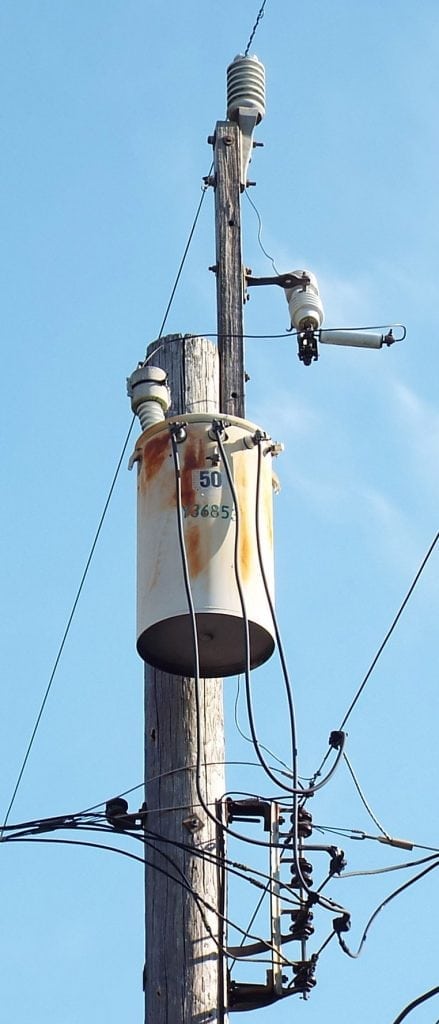 For a home inspector this has to be one of the ultimate “urban legends.” It is a widely held belief (that is further promulgated by inspection training schools). It is “common knowledge” that electricity is “always seeking the ground.”
We cannot truly come to grips with the importance of a home’s electrical grounding system, and the bonding of the home’s metal systems (water pipes, drain pipes, gas pipes etc), until we get this myth corrected in our minds.
If I have any readers left at this point, I consider it a great honor. I am well aware that the vast majority of my readers do not give one hoot about any of this as long as everything works when they plug things in or turns on when they flip a switch.
All readers, in my opinion should give a hoot however, in order to not get shocked or electrocuted while using those beloved appliances. I think that electrical system grounding and bonding should be taught in schools—it is just that important and only becoming more so every day.
Contrary to urban legend, the way the electrical system actually works is that electricity is attempting to return to its “source.” If this was not the case, we all would find it very inconvenient if every time we wanted our flashlight to work we had to stick a wire in the ground. Head lamps would be even more interesting.
In the case of your home’s electrical system, “the source” means the transformer out at the street. Many people, including home inspectors assume that everything is returning to “ground” because we ground the electrical panel with all these big ground wires that run to rod rods, concrete encased electrodes and/or buried water pipes running to the home.
It is understandably confusing—especially given that electricity always knows what it is doing and we do not.
During normal operation of the electrical system, when you turn on your toaster, current flows through the toaster elements to adequately burn your toast the desired amount, and then returns to the transformer via the neutral conductor. The fact that there are ground rods connected to this neutral conductor in the service panel is of no consequence because the path over the neutral wire is so much better (easier) it simply does not take the path via the ground rods (or at least not enough to notice). When it does take that path, it means there is a HUGE problem with the electrical system. The earth does not make a very good way to conduct the current back to the transformer—and besides that, it drives the earthworms crazy. But that is in fact what happens. The electricity would run through the earth, up the utility company ground rod/wire at the pole and back to the transformer. So in this sense, the electricity is not completing its circuit to the ground–it is completing it back to the transformer—back to its source.
When understood in this context, I hope it helps make it a little easier to understand why all metal components in the home have to be properly connected to the grounding system so that if the metal parts were to become energized, you would not be the only or easiest path between the energized pipe looking for a way back to the transformer. This becomes more of a matter of “how much” shock you will get as opposed to eliminating the chance of getting shocked altogether (and why GFCI’s are so important).
In most homes this becomes fairly straightforward, but because so many people have no clue about how all this works, the grounding/bonding systems often become compromised. Take a look at the following picture.

Water pipe bonding/grounding compromised by plastic components
For some reason someone installed additional “plastic” shut-offs on the two water pipes. They are near the main water shut-off where the water pipe runs through the foundation to the street. This home was built at a time when the only means of grounding the electrical system was the water pipe to the street. There were no ground rods that would have provided some redundancy. The installation of the plastic components leaves the house grounding system to rely on the utility company ground rod at the transformer. If that grounding is severed (WAY more common than one might think), it places the entire electrical system at greater risk in the event that lighting should strike the transformer and there is no place for other types of high voltage surges to be directed to the earth. The purpose of the ground rods (water service pipe, concrete encased electrodes etc) is to dissipate high voltage surges that can be imposed on the system from either the utility, nearby lightning strikes or even created within the home (it does other things too but I want to keep in simple right now). These types of surges are why surge protectors are becoming more and more important in the home although the only solution to a direct lightning strike is to replace the damaged components.
Another essential purpose of all those ground wires running all over the home and attached to all the metallic systems in the home is to create “an effective” path back to the service panel so that the circuit breakers would trip off in the event of an electrical fault to those metal components. Sometimes clearing a fault that will trip the breaker would indeed still give you quite a shock–resulting in even death–but the house won’t burn down and cremate you. GFCI’s, Ground Fault Circuit Interrupters, can and will keep you alive however. Nobody wants to go to their own cremation prematurely.
So to recap, our house grounding system has nothing to do with returning current to earth–it is always going back to the transformer–back to its source.
I highly recommend that anyone that has serious reservations about the information above (or wants a far more in depth treatise on the subject), please check out the Mike Holt video on grounding and bonding.
Charles Buell, Real Estate Inspections in Seattle
Duane Turner
Office: 09 811 8018
Mobile: 027 376 4806
duane.turner@abuyerschoice.com
www.waitakere.abuyerschoice.com
Waitakere & Surrounding Areas
| ||||||||||||||||||||||||||
http://www.nzherald.co.nz/business/news/article.cfm?c_id=3&objectid=11324293
Unfashionable suburbs are catching up to their trendier neighbours.
 The property at in Belmont has a CV of $820,000. Photo / Herald on Sunday / Doug Sherring
House prices in some Auckland suburbs are twice what they were just three years ago as the city experiences a second wave of booming property values. Others are enjoying increases as high as 40 per cent in just two years.
The QV statistics signal a fresh boom as previously unfashionable areas such as Glen Innes, Te Atatu and Belmont catch up to their more desirable neighbours.

The property on Line Road in Glen Innes has a CV of $530,000. Photo / Doug Sherring
And with the traditional pre-election lull in the market almost at an end experts predict a new surge among buyers. "The second wave of property prices is what we would expect when you have a big jump in the centre," said commentator Bernard Hickey of interest.co.nz.
"Some now see Mangere Bridge as the new Ponsonby."
Hickey said a government that wanted a capital gains tax or restrictions on foreign ownership could have a chilling effect.
But with National marching ahead in the polls, buyers were likely to have fresh confidence. "If people can't afford the centre they move to the fringes and that is what we are seeing," said Hickey.
"Population pressures are such that it would be a brave man to predict property prices in Auckland."

The property at Beach Rd has a CV of $425,000.
Auckland now has 26 suburbs with an average property price above $1 million. But the big gains are now in fringe suburbs.
In the East Auckland suburb of Glen Innes a three-bedroom home on 814sq m sold in September last year for $820,000 - a 97 per cent increase from the $415,000 it sold for in April 2011.
The two-level weatherboard house on Line Rd sold three times within three years - increasing each time by close to $200,000. The property had a CV of $530,000.
QV valuer Bruce Wiggins said the area had undergone a lot of change including housing redevelopment after the controversial removal of state housing stock.
"It is also sandwiched between St Heliers and Meadowbank so is a more affordable option for those who want to live in those suburbs."
In Te Atatu Peninsula a four-bedroom weatherboard home on 956sqm sold last November for $600,000 and again in April this year for $836,000 - a 39 per cent or $236,000 increase in just six months.
North Shore suburbs such as Sunnynook, Forrest Hill, Hauraki and Belmont had also seen significant growth with some properties selling for 40 per cent more than they did two years ago.

The property in Hauraki has a CV of $950,000.
Wiggins said areas experiencing the greatest growth had bigger sections, improved transport access, and had seen an increase in local cafes and restaurants. "Buyers are looking at these areas because they are still easy to access from the city and there has been reinvestment in the area," he said.
Last week, a four-bedroom family home on Northboro Rd in Hauraki sold for $1.7 million, 79 per cent more than the CV of $950,000 and $400,000 more than the September 2012 sale price of $1.3m.
Linda Simmons from Barfoot and Thompson said five bidders fought it out at auction.
Simmons said buyers priced out of areas like Epsom and Mt Eden were looking "over the bridge" at Hauraki, 8km from the city.
"Another factor in this area's value growth is the increasing interest of overseas buyers, who are keen to buy into the school zones, and seem to be willing to pay more than locals."
Last month, a property in nearby Belmont sold for $1.4m - $425,000 higher than its April 2012 sale price of $975,000.
City-fringe suburbs of Kingsland and Sandringham, Mangere Bridge and Otahuhu in the south and Kelston and Te Atatu Peninsula in the west also had gains. Wiggins said: "There are new cafes and businesses and the North Shore has good schools and access to beaches."
The ability to subdivide a section was a driving factor too. New council valuations for Auckland properties are due out in November.
Read more by Kirsty Wynn
Kind regards,
Duane Turner
Office: 09 811 8018
Mobile: 027 376 4806
duane.turner@abuyerschoice.com
www.waitakere.abuyerschoice.com
Waitakere & Surrounding Areas
The Bank of New Zealand has posted its half-year profit. Photo/Bevan Conley Increased pressure on bank margins will mean higher home ...